AMAZING THAILAND

Thailand or Siam, "the land of the White Elephant" or the country
of Muang Thai (Land of the Free). The Thais have their own culture
(including literature, drama, architecture, music, painting, sculpture, folk
dances, and many handicrafts), their own language, their own cuisine, their own
martial arts, and their own beliefs, with influences from China and India.After the short-lived kingdom of Sukhothai
founded in 1238, a unified Thai kingdom (Ayutthaya) was established in the
mid-14th century; it was known as Siam until 1939. Thailand is the only
southeast Asian country never have been taken over by a European power.
A
bloodless revolution in 1932 led to a constitutional monarchy. In alliance with
Japan during World War II, Thailand became a US ally following the
conflict.


RELIGION
Thailand's prevalent religion is Theravada Buddhism,
which is an integral part of Thai identity and culture. Active participation in
Buddhism is among the highest in the world. According to the 2000 census, 94.6%
and 93.58% in 2010 of the country's population self-identified as Buddhists of
the Theravada tradition. Muslims constitute the second largest
religious group in Thailand, comprising 4.9% of the population.
Islam is concentrated mostly in the
country's southernmost provinces: Pattani, Yala, Satun, Narathiwat,
and part of Songkhla Chumphon, which are predominantly Malay,
most of whom are Sunni Muslims.
Christians represent 0.9% and 1.17% of the population, with the
remaining population consisting of Hindus and Sikhs.

CULTURE
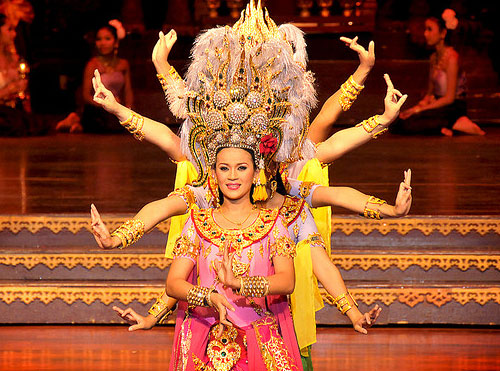
Thai culture has been shaped by many influences, including Indian, Lao,
Burmese, Cambodian, and Chinese.
Its traditions incorporate a great deal of influence from India, China,
Cambodia, and the rest of Southeast Asia. Thailand's national religion, Theravada
Buddhism, is central to modern Thai identity. Thai Buddhism has
evolved over time to include many regional beliefs originating from Hinduism, animism, as well as ancestor worship.
The official calendar in
Thailand is based on the Eastern version of the Buddhist Era (BE), which is 543 years
ahead of the Gregorian (Western)
calendar. Thus the year 2015 is 2558 BE in Thailand.
Several different ethnic groups, many of which are marginalised, populate
Thailand. Some of these groups spill over into Myanmar, Laos, Cambodia and
Malaysia and have mediated change between their traditional local culture,
national Thai, and global cultural influences. Overseas Chinese also form a significant
part of Thai society, particularly in and around Bangkok. Their successful
integration into Thai society has allowed for this group to hold positions of
economic and political power. Thai Chinese businesses prosper as part of the
larger bamboo network, a
network of overseas Chinese businesses
operating in the markets of Southeast Asia that share common family and
cultural ties.
The traditional Thai greeting, the wai, is generally offered first by the
younger of the two people meeting, with their hands pressed together,
fingertips pointing upwards as the head is bowed to touch face to fingertips,
usually coinciding with the spoken words "sawatdi khrap" for male
speakers, and "sawatdi kha" for females. The elder may then respond
in the same way. Social status and position, such as in government, will also
have an influence on who performs the wai first. For example,
although one may be considerably older than a provincial governor, when meeting
it is usually the visitor who pays respect first. When children leave to go to
school, they are taught to wai their parents to indicate their
respect. The wai is a sign of respect and reverence for another, similar to
the namaste greeting of India and Nepal.
As with other Asian cultures, respect towards ancestors is an essential
part of Thai spiritual practice. Thais have a strong sense of hospitality and
generosity, but also a strong sense of social hierarchy. Seniority is paramount
in Thai culture. Elders have by tradition ruled in family decisions or
ceremonies. Older siblings have duties to younger ones.
Taboos in Thailand include touching
someone's head or pointing with the feet, as the head is considered the most
sacred and the foot the lowest part of the body.


CUISINE
Thai cuisine blends five fundamental
tastes: sweet, spicy, sour, bitter, and salty. Common ingredients used in Thai
cuisine include garlic, chillies, lime juice, lemon grass, coriander, galangal,
palm sugar, and fish sauce (nam pla). The staple food in Thailand is rice,
particularly jasmine variety rice (also known as "hom Mali" rice)
which forms a part of almost every meal.
Thai cooking places emphasis on lightly
prepared dishes with strong aromatic components and a spicy edge. Thai chef
McDang characterises Thai food as demonstrating "intricacy; attention to
detail; texture; color; taste; and the use of ingredients with medicinal
benefits, as well as good flavor", as well as care being given to the food's
appearance, smell and context. Thai cooking rejects simplicity and is
about "...the juggling of disparate elements to create a harmonious
finish, particularly in Som Tum Pu Pla Ra"


TOURISM
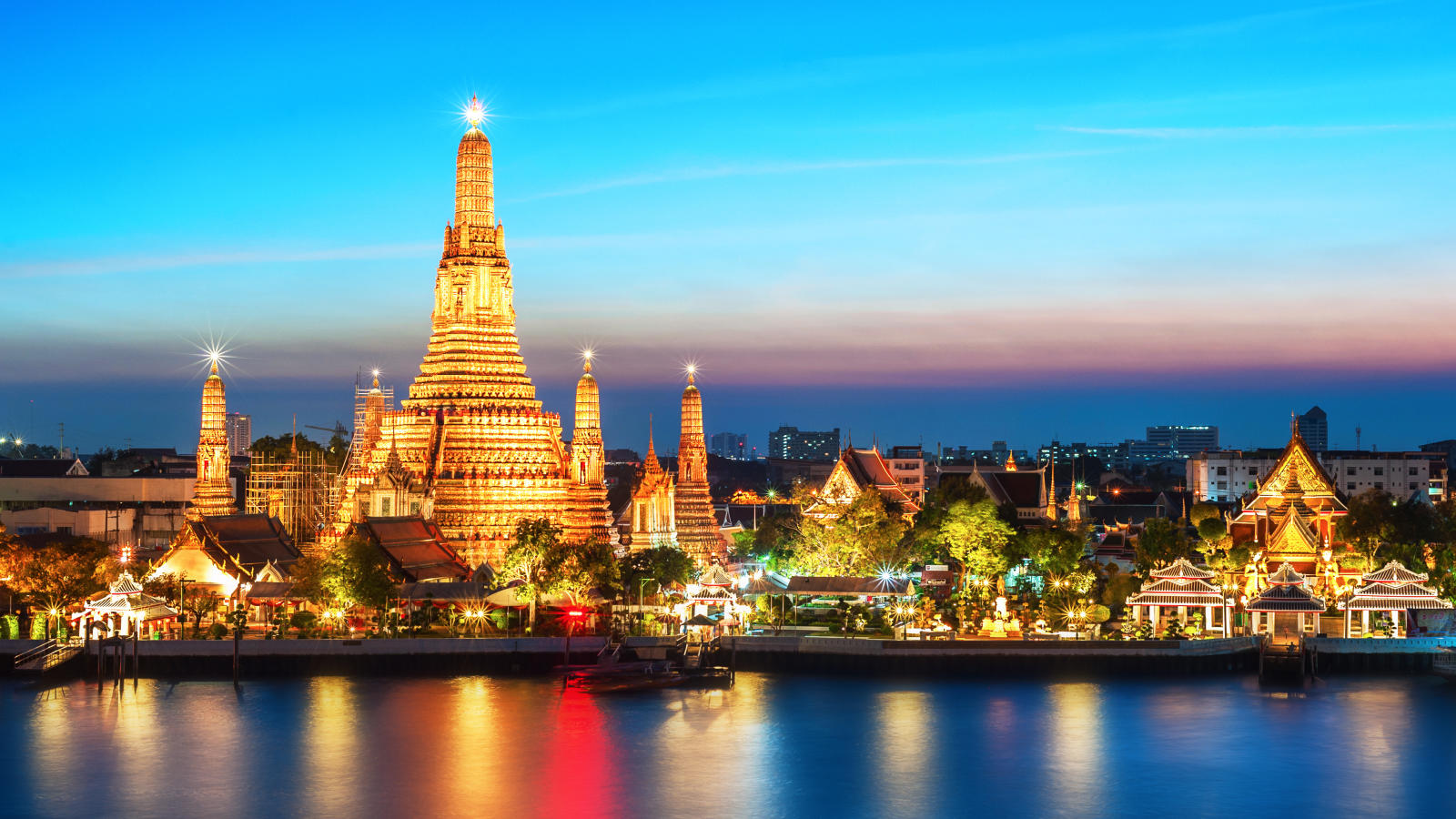
The Tourism Authority of Thailand uses the slogan
"Amazing Thailand" to promote Thailand internationally. In 2015,
this was supplemented by a "Discover Thainess" campaign.
Asian tourists primarily visit Thailand for Bangkok and the historical,
natural, and cultural sights in its vicinity. Western tourists not only visit
Bangkok and surroundings, but in addition many travel to the southern beaches
and islands. The north is the chief destination for trekking and adventure
travel with its diverse ethnic minority groups and forested mountains. The
region hosting the fewest tourists is Isan in the
northeast. To accommodate foreign visitors, the Thai government established a
separate tourism police with offices in the major tourist areas and its own
central emergency telephone number.
Thailand's attractions include diving, sandy beaches, hundreds of tropical islands, nightlife,
archaeological sites, museums, hill tribes, flora and bird life, palaces, Buddhist temples and
several World
Heritage sites. Many tourists follow courses during their stay in Thailand.
Popular are classes in Thai cooking, Buddhism and
traditional Thai
massage. Thai national festivals range from Thai New Year Songkran to Loy
Krathong. Many localities in Thailand also have their own festivals. Among the
best-known are the "Elephant Round-up" in Surin, the "Rocket
Festival" in Yasothon, Suwannaphum District, Phanom Phrai District both district are located in Roi Et
Province and the "Phi Ta
Khon" festival in Dan Sai. Thai cuisine has become famous worldwide with
its enthusiastic use of fresh herbs and spices.

TRADITIONAL CLOTHING
Thai people called chut thai which
literally means "Thai outfit". It can be worn by men, women, and
children. Chut thai for women usually consists of a pha
nung or a chong
kraben, a blouse, and a sabai. Northern and northeastern women may wear a sinh instead of a pha
nung and a chong kraben with either a blouse or a suea
pat. Chut thai for men includes a chong kraben or pants, a Raj
pattern shirt, with optional knee-length white socks and a sabai. Chut thai
for northern Thai men is composed of a sado, a white Manchu styled jacket, and sometimes a khian
hua. In formal occasions, people may choose to wear a so-called formal Thai.
Thailand has many attractions. The Ruins
Historic land Natural resources Community and culture, etc. There are also
various ways to travel. Whether it is eco-tourism. Agro-tourism Adventure
Travel with homestay. Learn the local way of life. Participation in the
festival. All of them create a memorable experience for visitors to step into
the beauty of Thailand's tourist attractions and traditions spread throughout
the region. From north to south East of the West. All over the region there are places to visit the sparkling diamonds. Even on a steep mountain in the deep forest in the middle of the sea. Or even the border of Thailand. These attractions are one of the wonders of Thailand. The Tourism Authority of Thailand proud to produce a picture of the wonderful Thailand.
BY Amanee Mahsaechahnae

ความคิดเห็น
แสดงความคิดเห็น